How to Use Points to Book Complex Multi-City Family Itineraries
The Family Trip That Points Were Made For

Let’s be honest. Booking a single round-trip flight for a family with points is a victory in itself. But what about the trip you're *actually* dreaming of? London, Paris, then a Mediterranean cruise? Tokyo, Bangkok, and a beach finale in Bali? That's the real prize. Most people see that itinerary and think "way too complicated for points." But they're wrong. This is the exact space where miles and points flex their true power. The airlines have the tools. You just need the map.
Stopover vs. Open Jaw: Your Secret Weapons
 short line to City C. On the right, two separate dotted lines: City X --> City Y, then City Z --> City X. Clean, abstract map background, flat design. --ar 16:9">
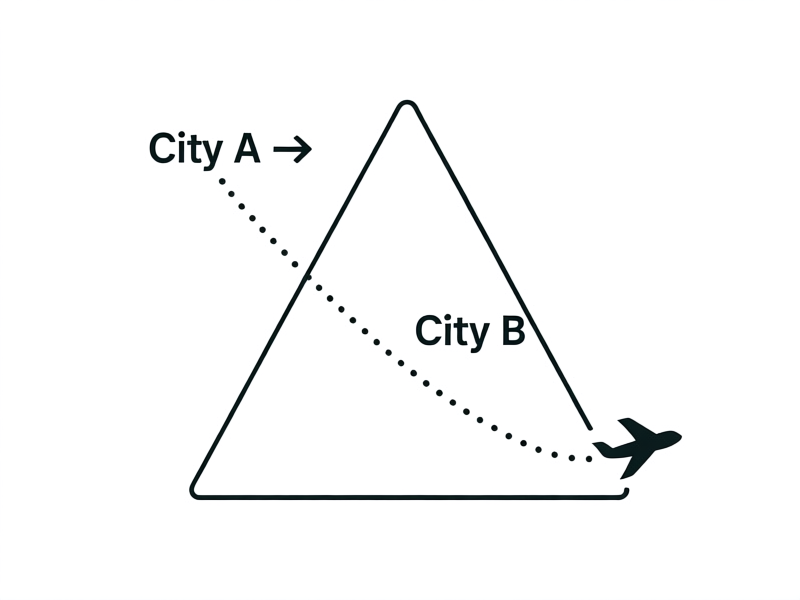
Forget airline jargon. Think of your ticket as a permission slip. A standard round-trip says you can go "A to B and back." Boring. A **stopover** is a built-in multi-day vacation *on the way* to your main destination, for little to no extra points. It’s not a layover. It’s a deliberate, planned second holiday. You're flying New York to Rome, but you can "stop over" in Reykjavik for a week on the way. One points price, two vacations. An **open jaw** is even simpler: you fly into one city and out of another. Land in Amsterdam, take a train across Europe, and fly home from Vienna. This crushes backtracking and saves your sanity. Most complex family trips are just smart combinations of these two rules.
Forget the Tool, Master the Goal First
Here's where everyone gets stuck. They fire up the airline's website and start hammering in random dates. It's a recipe for frustration. Step one: throw the tool away. Get a blank piece of paper. Seriously. Write down your must-see cities. Then, be ruthlessly flexible. Can Bangkok be swapped for Singapore? Can you travel mid-week, or in October instead of July? Flexibility is currency, and it buys you availability. Only *after* you have 2-3 potential route sketches and date ranges do you touch a search engine. You're not asking the tool for a trip; you're asking it to price the brilliant, flexible plan you already made.
Building It, Piece by Painless Piece
The magic trick is called "married segment logic." Airlines price your entire itinerary as one unit. Finding 4 seats on that perfect multi-city route might be impossible. So you break the problem down. Search for each leg separately. New York to Lisbon? Available. Lisbon to Athens? Available. Athens back to New York? Available. *Now* you search for the full, combined itinerary. If it's available, book it. If it's not, you have a choice: adjust a date, change a city, or get on the phone. A patient agent can sometimes manually "marry" those available segments you found into one award ticket. It's work. But it's the work that gets your family to three countries for the price of one.
The One Rule You Can't Break
Here’s the gut-check moment. You've built an epic, points-efficient monster. London, with a stopover in Istanbul, flying home from Cairo. Amazing. Now, read the *entire* routing. What are the layover times? Are any connections in different airports (looking at you, New York JFK vs. LGA)? Does your family need visas for any of these places? An itinerary that makes perfect sense to a computer can be a logistical nightmare for humans, especially with kids and jet lag. Always, *always* build in buffer. A 90-minute connection in Frankfurt in summer is a sprint you don't want to make. Pay a few more points for a longer, more relaxed connection. Your future self will thank you.
More Cities, More Stories, Same Points Budget
This is why you do it. Not to check a box, but to collect the kind of stories that don't come from a single beach resort. The "remember when we got lost in the Tokyo subway?" stories. The "that pastry in Vienna was the best thing I've ever eaten" stories. Using points for complex trips isn't about being cheap. It's about being ambitious. It's trading the standard vacation for a richer, deeper, more memorable adventure. The points cover the flights. You're left with the real treasure: time, and the wild, wonderful experiences you fill it with.